


Online travel agencies (OTA’s) have had a significant impact on the adventure industry, with approximately 60% of travelers now purchasing tickets through platforms like GetYourGuide and Trip Advisor. While the demand for these digital distributors is becoming hard to ignore, it raises the question of whether the benefits outweigh the high commission percentages, which can reach up to 30%.
For businesses managing multiple booking channels, the challenge goes beyond deciding whether to work with an OTA. Tour operators also need a strategy and the right tour operator booking software to manage availability, resources, and reservations across both direct and third-party channels.
OTAs can help tour and activity operators reach new travelers, increase visibility, and create additional booking opportunities. But adding more distribution channels can also create more complexity when it comes to managing availability, inventory, and reservations.
In this article, we’ll explore the top three benefits of working with OTAs and three strategies for managing those relationships while maintaining control of your direct bookings and operations.
Table of Contents
1. Benefits of OTA’s
Online travel agencies were created to make it easier for travelers to discover, compare, and book experiences. For tour operators, they can also serve as an additional distribution channel for reaching travelers who may not otherwise discover their business.
Viator, arguably the first online travel agency, was established in 1995 to provide customers with a solution for finding and comparing various activity options. Since then, numerous companies have emerged to offer similar solutions.
However, OTAs work best as an additional distribution channel—not a replacement for your direct booking strategy. Without the right systems in place, managing multiple channels can also create challenges around availability, inventory, and reservations.
This is where tour operator booking software can play an important role by helping operators maintain visibility and control as they expand where and how guests can book.
Here are the advantages of strategically partnering with OTA’s in your business.
1. Increased Exposure
Companies like Viator/Trip Advisor have spent the last two (2) decades learning how customers think, how they search, and how to keep up with the ever-evolving technologies of the day.
Because of this, they have become specialists at getting in front of people whom they know are looking for activities or travel offerings (YOUR POTENTIAL CUSTOMERS). Not to mention that they have marketing budgets that can reach in the millions.
Therefore, OTA’s have established a strong presence on Google due to several factors.
- Firstly, their strong brand recognition instills trust in customers.
- Additionally, OTA’s have perfected the digital purchasing experience by storing credit card information, making it convenient for customers to make repeat purchases.
- They also provide a platform for reviews, giving buyers confidence in their choices when comparing multiple offerings.
- Moreover, OTA’s often offer competitive or discounted prices, further enhancing their appeal to customers.
On top of that, Google has recently re-introduced Google Things To Do, a specialized search platform for travelers looking to book trips and explore recommended activities. This platform gives priority to optimized offerings, putting OTAs at a significant advantage when it comes to visibility on this platform. (Go see for yourself – Google “things to do in Atlanta” and see what listings show up at the top)
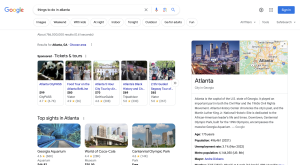
The ultimate goal is to ensure that travelers searching for offerings similar to what you provide can easily find your business. Online travel agencies (OTAs) excel at placing their listings in front of these specific travelers. By partnering with a well-known OTA and listing some of your offerings, you can greatly enhance your visibility on Google. This enables potential customers who may be challenging or expensive to reach to discover your business.
The key is making sure your OTA strategy complements your direct booking strategy instead of competing against it.
2. Optimized Selling
As mentioned earlier, OTAs invest significant time and resources into understanding the thought process and search patterns of buyers. They constantly gather data to gain insights into the subtle nuances of human behavior when making purchasing decisions.
Working with an OTA offers a significant advantage because not only does this data help improve the visibility and sales of your listings, but the OTAs also outline and even sometimes handle the optimization process for you.
GetYourGuide, a leading travel platform for booking tours, attractions, excursions & activities shares how they will provide optimization suggestions based on performance analysis taken from GetYourGuide data. The system will automatically indicate the areas that can be improved such as sales or content and will outline the actions you should take to improve optimization.
OTA’s want your offerings to sell just as much as you do so their expert insights can help you keep reservations coming. And remember, this optimization knowledge doesn’t have to stop with the OTA offerings. Read below for our recommendations on how to use this knowledge to simultaneously boost your direct bookings.
3. Simplified Marketing
With the ever-evolving effectiveness of digital searching, consumers are adapting their behaviors accordingly. OTAs, with their high rankings on Google, have become the go-to search platforms for many buyers. While some still choose to make their purchases through an OTA, a recent survey revealed that 43% of those using OTAs for their search will ultimately book directly.
By listing selected offerings on OTAs, you make your business visible to travelers who are actively researching experiences and comparing their options across multiple booking sites. For businesses using activity and tour software to manage their offerings, OTAs can become part of a broader distribution strategy rather than another disconnected system to manage manually.
This not only increases your exposure but also adds value while reducing your acquisition costs that could otherwise be spent on paid ads.
So, while nothing is truly free, having just a single listing with an OTA can provide a return on investment beyond the bookings it directly generates. This is particularly advantageous if you are not currently investing in paid ads (and an expensive agency that manages them for you).
The easier your booking technology connects with the other tools and channels you use, the easier it becomes to manage a growing distribution strategy.
2. How to Work With OTAs on Your Terms
While the benefits of working with an OTA can be appealing, commissions and operational complexity mean that not every offering or channel will make sense for every business.
The goal is not necessarily to avoid OTAs. Instead, operators should be intentional about how they use them and ensure their tour operator booking software and operational processes can support their overall distribution strategy.
At The Flybook, we have developed direct integrations with popular OTAs like GetYourGuide, Viator, and Airbnb, allowing us to understand the various ways tour operators, outfitters, and adventure resorts can strategically collaborate with these platforms to their advantage.
1. Negotiate
Although the commission percentages charged by OTAs may appear to be high (30% is a significant portion), it is worth noting that some OTAs are open to negotiating their share, especially if you have a unique offering or operate in a location where they have limited options.
OTAs aim to establish themselves as the go-to platform for travelers to book their activities, and to achieve this, they need to provide a wide range of offerings. This is where your offerings come in. By partnering with an OTA, you become an essential part of their diverse inventory. As a result, they are often willing to engage in negotiations to secure your offerings on their platform.
Remember, OTAs are eager to attract a variety of offerings in order to cater to the needs of different travelers. This presents an opportunity for you to leverage your unique value and negotiate a more favorable commission rate.
2. Learning From the Data
Take advantage of the data-driven insights from OTAs to optimize more than just the listings you have on their platforms. These companies analyze search behavior, booking trends, and listing performance to identify what travelers respond to.
By reviewing their recommendations, particularly around naming conventions, descriptions, images, pricing, and demand, you can apply those insights to your direct booking channels as well.
The more you understand what influences bookings, the better you can optimize your tour booking strategy across every channel you use.
3. Get Creative With Your Offerings
When partnering with an OTA, you don’t have to list every offering you sell. In fact, you can strategically select or create specific experiences for OTA distribution while reserving others for direct bookings.
This approach becomes much easier when your tour operator booking software allows multiple offerings to share the same underlying resources, inventory, equipment, or staff. You can create different booking options for different channels while still maintaining visibility into overall availability.
While it’s understandable that you don’t want to give a 30% commission on a booking that could have come directly, you can create a slightly modified offering that the OTAs can list while limiting their availability. This way, you can avoid competing against yourself and still benefit from the exposure provided by the OTA.
For example, if your specialty is 1-1 guided fishing tours, you have the opportunity to create a distinctive offering. Consider adding a unique touch, like providing a complimentary shirt or a small giveaway that adds value to the guest experience, to make your offering even more enticing. You can adjust the price accordingly to account for these additional perks. This particular offering can then be exclusively listed through OTAs, allowing you to manage it separately while still benefiting from the exposure they provide.
Flybook’s tour operator booking software helps businesses manage shared inventory and resources across multiple offerings. This gives operators the flexibility to create different experiences for direct bookings and third-party channels while helping prevent overbooking and maintain control of availability.
Explore Flybook’s integrations to see how connected tools can help support your booking and distribution strategy.
In the ever-evolving travel landscape, online travel agencies (OTA’s) have reshaped the adventure industry. Because these platforms are capturing a significant amount of travelers’ bookings (remember 60%!), working with an OTA is certainly worth discussing. With benefits such as enhanced visibility, optimized performance, and cost-effective marketing, adding this channel to your distribution strategy becomes a must-do.
Just as importantly, make sure your technology can support your strategy. The right tour operator booking software can help you manage bookings, availability, resources, and integrations as your business expands across multiple channels.
So, when entering into discussions around listing on an OTA, don’t forget to negotiate for a commission rate that is best for you. Make sure to leverage their data to optimize all your listings, and lastly, be selective and creative with the offerings you list on the OTAs.
Looking to Manage More and Grow? The Flybook Reservation Software Can Help.
